

If you are considering a UAE free zone company but want a setup that is practical, cost-aware, and still credible for banking and day-to-day operations, the RAK Economic Zone (commonly known as RAKEZ, Ras Al Khaimah Economic Zone) is one of the options that deserves a closer look.
It is also a zone that is often misunderstood. Some founders assume it is “only for factories,” while others expect it to work like a Dubai free zone without adjusting for banking, substance, or operational realities. This guide explains who the RAK Economic Zone is for, why founders choose it, and what to confirm before you commit.
What the RAK Economic Zone is (and what it is not)
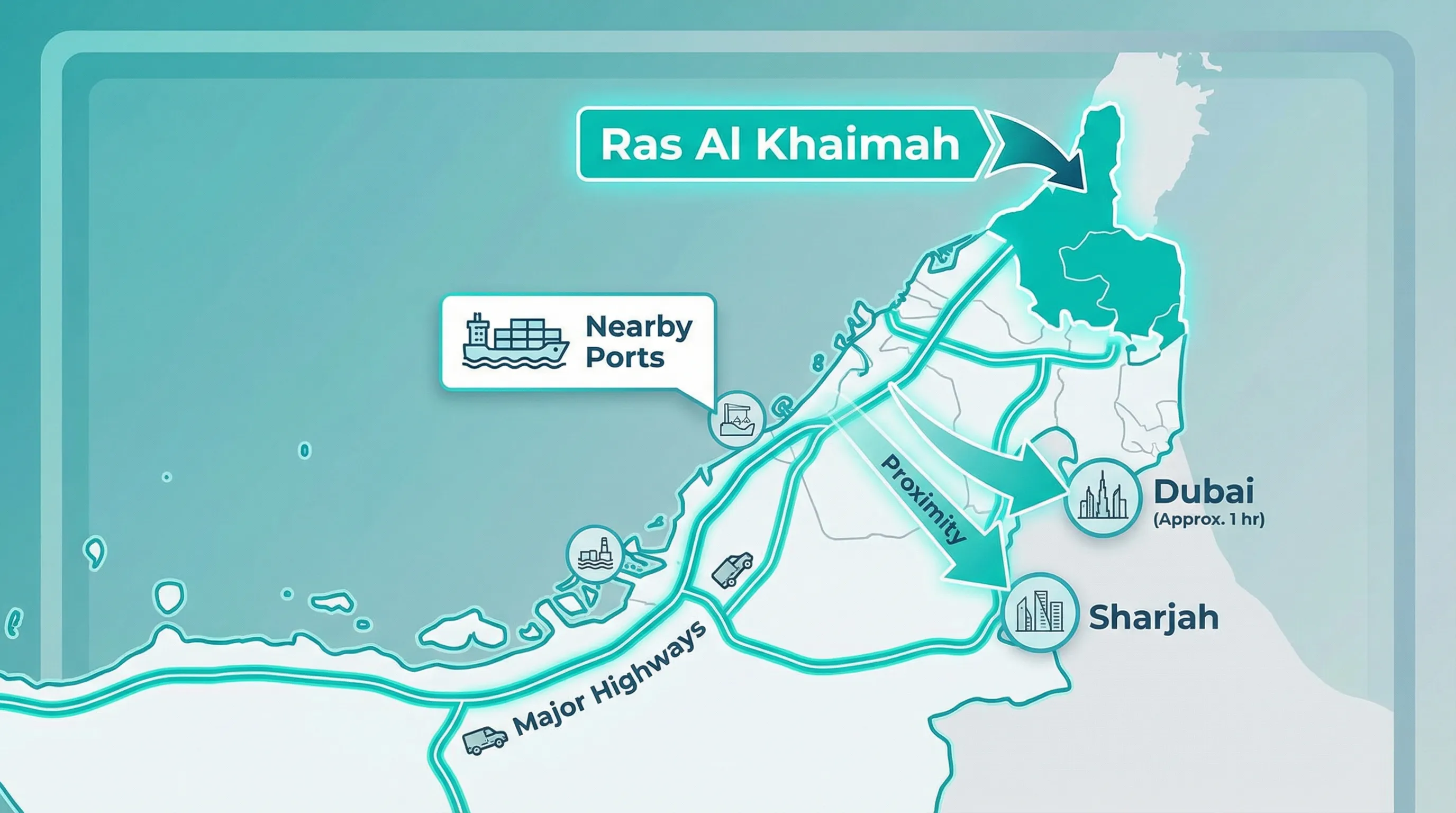
RAK Economic Zone is a free zone jurisdiction in the Emirate of Ras Al Khaimah. Like other UAE free zones, it provides a framework to incorporate a company, obtain a license for approved activities, and access services such as facility leasing and visa processing through the zone.
What it is not:
- It is not the UAE mainland. Mainland companies are licensed through the relevant Department of Economic Development (DED) and follow a different regulatory and operational model.
- It is not “automatically tax-free.” The UAE corporate tax regime applies nationally, with specific rules for free zone persons and “qualifying income.” Your tax outcome depends on facts, activity, and compliance, not the marketing label “free zone.”
- It is not a bank account guarantee. A free zone license helps, but UAE bank onboarding is driven by KYC/AML checks, business profile, and evidence of real activity.
For official background, see the RAKEZ website and UAE government information from the Ministry of Economy.
Who the RAK Economic Zone is for
RAK Economic Zone tends to fit founders who want a UAE structure that is functional and scalable without defaulting to premium-priced jurisdictions.
1) SMEs prioritizing cost control without “cutting corners”
Many early-stage and mid-sized businesses are looking for a compliant UAE base while keeping overhead sensible. RAK Economic Zone is commonly shortlisted by founders who want:
- A recognized UAE entity and license
- An operational setup that can expand later (staff, warehouse, facilities)
- A jurisdiction that supports both service and trading profiles (subject to activity approvals)
The best-fit owners are realistic: they treat setup as the start of compliance, not a one-time transaction.
2) Trading, e-commerce, and distribution businesses that need a UAE hub
If you sell physical goods, import/export, or manage regional distribution, you typically care about logistics, warehousing options, and cost of doing business. Ras Al Khaimah can be attractive when the business model benefits from:
- Practical facility options (depending on what you lease and what your activity requires)
- A UAE base that supports operational credibility with suppliers and partners
You still need to validate whether your trading model requires mainland elements (for example, certain onshore contracts or regulated activities), which is a structuring question, not a “RAK vs Dubai” question.
3) Manufacturing and industrial operators
RAK is known in the UAE for industrial activity, and RAK Economic Zone is commonly considered by founders who need:
- Industrial or light manufacturing setups
- Storage, assembly, packaging, or similar operational footprints
- A jurisdiction where facilities and permitting pathways are built with industrial use cases in mind
For industrial businesses, success is less about the headline license and more about matching:
- Your activity scope to approvals
- Your facility to operational and safety requirements
- Your imports, customs, and supply chain to the correct registrations
4) Professional services firms that value simplicity
Consultancies, marketing agencies, software services, and certain professional services often look for a jurisdiction that is straightforward to incorporate and maintain.
The key is to avoid licensing mismatch. If your actual activities include regulated elements (for example, financial services, certain health services, or specific education models), you need to confirm the correct regulator and licensing route.
5) International founders who need UAE residency visas tied to a company
Many founders evaluate a free zone because it can support UAE residency visas through the company (subject to rules and eligibility). RAK Economic Zone can be part of a plan where you want:
- A company structure aligned with a real business plan
- A visa pathway that matches staffing needs over time
Visa eligibility, quotas, and documentation requirements can change, so treat visa planning as a workstream, not an assumption.
Quick fit check
| Profile | Why RAK Economic Zone is often considered | What to verify early |
|---|---|---|
| Cost-conscious SME | Sensible setup and operating overhead | Banking plan, activity fit, compliance calendar |
| Trading / e-commerce | UAE hub for regional operations | Customs model, warehousing, supplier contracts |
| Manufacturing / industrial | Industrial-friendly positioning | Facility requirements, permits, HSE constraints |
| Service business | Straightforward incorporation and maintenance | Correct activity selection, invoice flows, VAT exposure |
| Founder needing visas | Company-linked residency route | Visa eligibility, office requirements, timing |
Why founders choose RAK Economic Zone
The practical “why” usually comes down to a combination of operational flexibility and cost, balanced against the business’s credibility needs.
A business-first jurisdiction (when structured correctly)
RAK Economic Zone can work well when your goal is not just “a UAE company,” but a UAE company that:
- Can open bank accounts with a well-prepared compliance file
- Can contract with clients and suppliers under a coherent activity scope
- Can scale into facilities or staff as revenue grows
The foundation is good structuring: shareholding, governance, signatories, and licensing scope should match the real business.
Logistics and facilities advantages for certain models
For businesses that need storage, light industrial capabilities, or distribution efficiency, RAK is often evaluated as part of a broader operational plan.
That said, do not choose a jurisdiction solely because you might need a warehouse “someday.” Choose it because your operational plan is aligned now, or clearly planned within a defined timeframe.
A strong option when you take compliance seriously
A free zone can be a compliance win if you set it up with the right expectations:
- Corporate governance (signing authority, board decisions where needed)
- Accounting records and audit readiness (where applicable)
- Tax registration and reporting when thresholds and rules apply
- Proper contracts and invoicing aligned with the licensed activity
For tax and VAT references, consult the UAE Federal Tax Authority.
What to confirm before choosing RAK Economic Zone
Most “setup problems” are actually decision problems made early. Confirm these points before you incorporate.
Activity and licensing scope (your future bank will care)
Your license should reflect what you actually do, not just what sounds convenient.
Misalignment creates downstream issues:
- Bank compliance questions you cannot answer cleanly
- Client contracts that do not match your permitted activities
- VAT and tax classification confusion
If your revenue model spans multiple lines (for example, software services plus hardware trading), confirm whether you need multiple activities under one license, multiple licenses, or a different jurisdiction.
Facility needs and “substance” expectations
Even when a package allows a minimal footprint, your business may still need substance to satisfy:
- Banking onboarding (proof of operations)
- Tax and commercial credibility (especially B2B)
- Practical needs like hiring and meeting clients
Substance is not one-size-fits-all. A consulting firm and a distribution business will present evidence of activity differently.
Ownership, control, and nominee arrangements
Some founders consider nominee director arrangements for privacy or administrative reasons. This is a sensitive area that must be handled carefully with proper governance, clear agreements, and an understanding of disclosure obligations.
If you are considering nominees, treat it as a governance project, not a checkbox.
Banking: plan it from day one
A bank account is often the longest pole in the tent. To improve outcomes, prepare:
- Clear business description and target markets
- Source of funds and source of wealth documentation (for owners)
- Contracts, invoices, or pipeline evidence
- A website, professional email domain, and consistent corporate profile
No jurisdiction can promise banking, but a well-structured file materially improves your odds.
Corporate tax and VAT: avoid assumptions
By 2026, corporate tax compliance is a normal part of UAE operations. Free zone companies may benefit from specific corporate tax outcomes if they meet conditions under UAE law and guidance, but the details matter (nature of income, counterparties, substance, and documentation).
Similarly, VAT at the federal level can apply depending on taxable supplies and thresholds.
Use primary sources where possible, starting with the Federal Tax Authority and official legislation and guides.
A due diligence table you can actually use
| Topic | What you should decide | What you should document |
|---|---|---|
| Licensed activities | What you do now and in 12 months | Service descriptions, product list, client types |
| Operational footprint | Virtual vs physical, staffing plan | Lease plan, hiring plan, operational workflow |
| Banking strategy | Which banks, timeline, backup plan | KYC pack, ownership documents, contracts |
| Tax readiness | Corporate tax position, VAT exposure | Accounting policy, invoicing flow, registrations |
| Governance | Signatories, decision-making, nominees (if any) | Resolutions, POAs (if needed), agreements |
How RAK Economic Zone setup typically works (high-level)
Exact steps vary by activity and shareholder profile, but most incorporations follow a similar arc:
Scoping and structuring
You define the activity scope, shareholders, management, and operational footprint. This is where most value is created, because it determines downstream banking and compliance.
Incorporation and licensing
You submit incorporation documents, obtain the license, and set up initial corporate governance documentation.
Establishing operations
Depending on your plan, this may include leasing space, onboarding suppliers, setting up accounting, and preparing a bank KYC file.
Visas and ongoing compliance
If you need residency visas, you plan the timing and documentation. Separately, you set a compliance rhythm for renewals, filings, accounting, and tax.
Common mistakes (and how to avoid them)
Choosing a license that is “easy” instead of accurate
This can backfire with banks and larger clients. The fix is to map your services and products to the correct activity scope before you apply.
Treating the bank account as an afterthought
Founders often incorporate first and then scramble for banking. Instead, build your KYC narrative in parallel with setup.
Over-optimizing for cost and under-optimizing for credibility
A cheaper setup can become expensive if it causes delays, rejected bank applications, or contract limitations. Aim for the minimum viable structure that still supports your revenue plan.
Ignoring ongoing compliance
Renewals, governance, bookkeeping, and tax registrations are operational responsibilities. If you do not have internal capacity, you need an external compliance partner.
Where Alldren fits
Alldren supports company setup and structuring in the UAE with an emphasis on transparent guidance, robust compliance, and direct access to senior experts. If you are considering the RAK Economic Zone, the most valuable help is usually not “form filling,” it is ensuring your structure matches:
- Your real activity and contract flow
- Banking and compliance expectations
- Tax readiness and operational scalability
You can learn more about Alldren’s approach at Alldren.
Frequently Asked Questions
Is RAK Economic Zone the same as RAKEZ? Yes. People often say “RAK Economic Zone” to refer to RAKEZ, Ras Al Khaimah Economic Zone.
Is RAK Economic Zone only for manufacturing companies? No. It is frequently used by industrial operators, but it is also used for trading and service businesses, subject to activity approvals.
Can a RAK Economic Zone company trade with UAE mainland customers? It depends on your activity, licensing scope, and how you structure your commercial arrangements. Confirm the correct model before you sign contracts.
Will a RAK Economic Zone license guarantee a UAE bank account? No. Banking depends on KYC/AML checks and your business profile. Good structuring and documentation improve outcomes, but there is no guarantee.
Do RAK Economic Zone companies pay UAE corporate tax? The UAE corporate tax regime applies nationally. Some free zone companies may qualify for specific treatment depending on conditions and guidance. Confirm your position based on your facts and keep proper records.
Get a RAK Economic Zone setup that works in real life
If you want to use the RAK Economic Zone as more than a license on paper, focus on getting the structure right from day one: activity scope, governance, compliance planning, and a bank-ready profile.
If you would like expert-led support for structuring and setting up your UAE company with transparent guidance, explore Alldren and speak with a senior specialist about the right jurisdiction and setup path for your business.


