

Ras Al Khaimah (RAK) has become one of the UAE’s most pragmatic jurisdictions for entrepreneurs and international groups who want a stable base, straightforward administration, and a cost-conscious route to market. But “company formation in Ras Al Khaimah” can mean different things depending on where you incorporate (free zone, mainland, or offshore), what you plan to do in the UAE, and how you want to handle banking, visas, and tax.
This overview walks through the main pathways, what each one is best for, the typical incorporation steps, and the compliance points to think about before you commit.
Why set up in Ras Al Khaimah?
RAK appeals to founders who want UAE credibility without automatically defaulting to Dubai or Abu Dhabi. In practice, the emirate is often chosen for a mix of operational and regulatory reasons.
Common drivers include:
- Cost efficiency: Many RAK setups can be more budget-friendly than larger emirates, depending on license type, premises requirements, and visa needs.
- Industrial and trading ecosystem: RAK has a strong base for manufacturing, trading, and logistics.
- A clear free zone offering: RAK Economic Zone (RAKEZ) is a widely used option for SMEs and international operators.
- Access to UAE banking and residency pathways: With the right structure and substance, RAK entities can support corporate banking and residence visas.
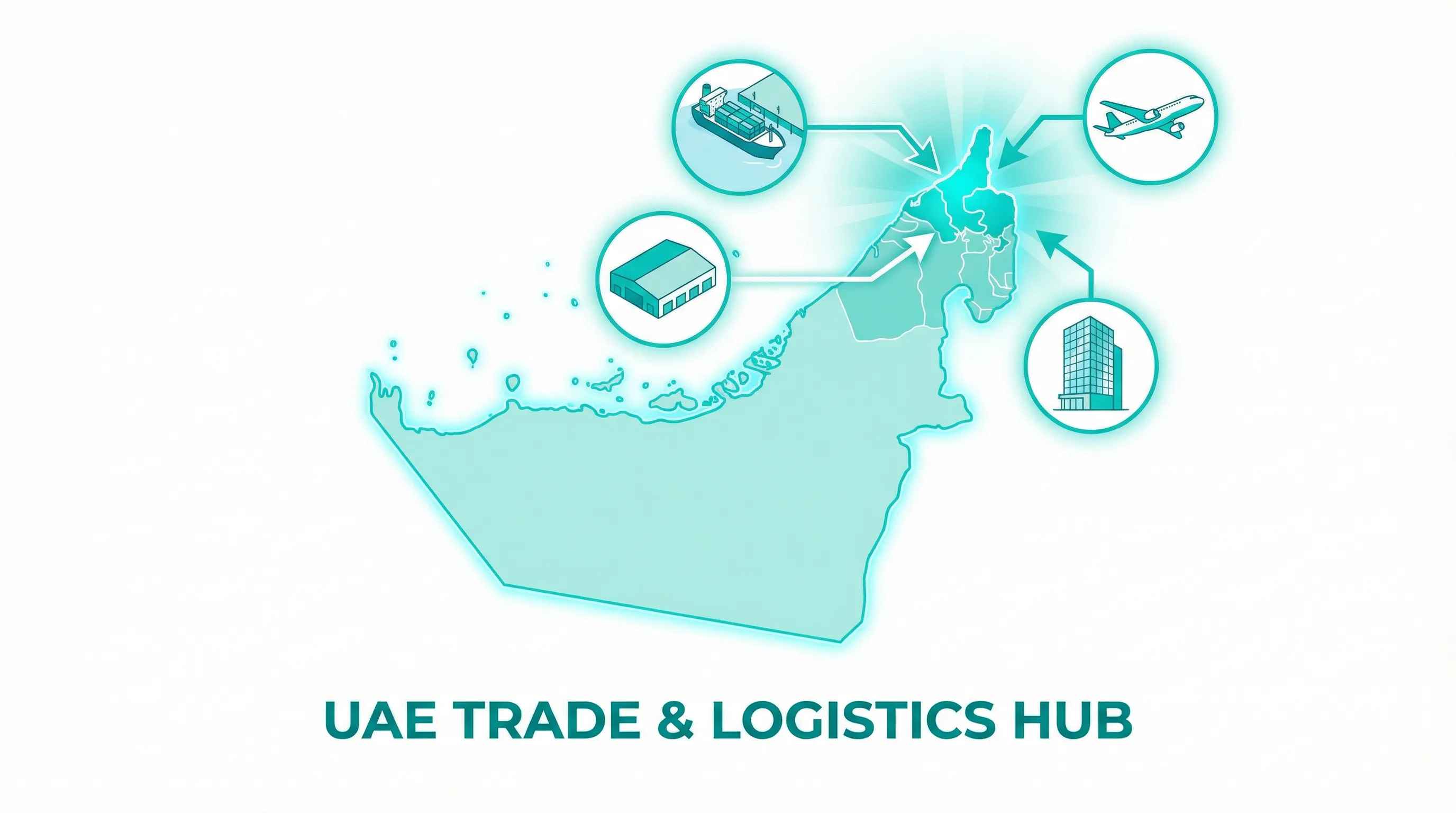
The 3 main routes for company formation in Ras Al Khaimah
RAK offers three common “jurisdictions” for incorporation. Choosing the right one is the most important decision you will make early on because it affects where you can trade, what premises you need, whether you can hire and sponsor visas, and how counterparties (banks, suppliers, platforms) view your business.
1) RAK Free Zone (commonly via RAKEZ)
A RAK free zone company is typically used for:
- International trading (import, export, re-export)
- Consulting and services (especially cross-border)
- Holding and operating companies that want a UAE base
- Light industrial and warehousing (depending on the facility)
Free zones are popular because they can be administratively efficient and are designed around business licensing. In many cases, they provide packaged options that combine licensing with facility solutions (for example, flexi desks, offices, warehouses, or land leases, depending on the activity).
A key consideration is where you will sell:
- Many free zone companies can sell internationally and within the free zone.
- Selling “onshore” in the UAE mainland may require specific arrangements (for example, using a local distributor) depending on your activity and licensing.
Reference: RAKEZ official site
2) RAK Mainland (licensed by the emirate’s economic department)
A mainland company is generally used when you need to:
- Trade directly with customers across the UAE market (without free zone limitations)
- Bid for certain local contracts
- Operate a retail, restaurant, or other customer-facing business
Mainland structures can be a better fit for businesses where the UAE is the primary market. They may come with different premises requirements and approvals depending on the activity.
3) RAK Offshore (commonly via RAK ICC)
An offshore entity is typically used for:
- Holding shares in subsidiaries
- Holding assets (where appropriate and with professional advice)
- International structuring where UAE “onshore operations” are not required
Offshore entities are generally not intended for running an operating business in the UAE market in the same way a mainland or free zone company would, and they typically do not support the same operational setup (for example, leasing premises for active business operations) depending on the structure.
Reference: RAK International Corporate Centre (RAK ICC)
Quick comparison: free zone vs mainland vs offshore in RAK
Use this table to align your intent with the most typical route.
| Option | Best for | UAE onshore selling | Visas | Premises expectations | Common watch-outs |
|---|---|---|---|---|---|
| RAK Free Zone (e.g., RAKEZ) | Cross-border services, trading, light industrial | Sometimes restricted depending on model and activity | Often available (package-dependent) | Often provided as part of the setup (flexi desk to warehouse) | Banking expectations, substance, and onshore sales model |
| RAK Mainland | UAE-facing operations, local contracts, retail | Yes | Usually available | Often requires a physical lease suitable to the activity | Additional external approvals for regulated activities |
| RAK Offshore (RAK ICC) | Holdings and structuring (non-operating) | Not designed for active onshore trading | Typically not used for visas | Usually not an operating premises model | Not suitable for operating businesses or hiring locally |
Note: Exact permissions depend on your licensed activity, your jurisdiction rules, and how you execute contracts. If onshore UAE sales matter, validate the model before you incorporate.
Licensing in RAK: activities and legal forms (what you decide upfront)
Your incorporation pathway will require you to define two things early:
Licensed activity
The “activity” determines what you are allowed to do, and it can impact:
- Whether additional approvals are required
- Whether specific qualifications are needed
- Whether you need certain premises (office, warehouse, industrial unit)
Examples of broad categories include trading, services/consulting, industrial/manufacturing, and e-commerce. Each category has sub-activities, and the exact wording on the license matters in banking and compliance.
Legal form
Your legal form affects shareholder liability, governance, and how documents are drafted. Common forms include limited liability entities in free zones and mainland structures, plus offshore structures for holdings.
Because the UAE is increasingly substance and compliance driven, it is worth aligning legal form with reality, not just cost. For example, if you will have employees and decision-makers in the UAE, structure governance and signatory arrangements to match.
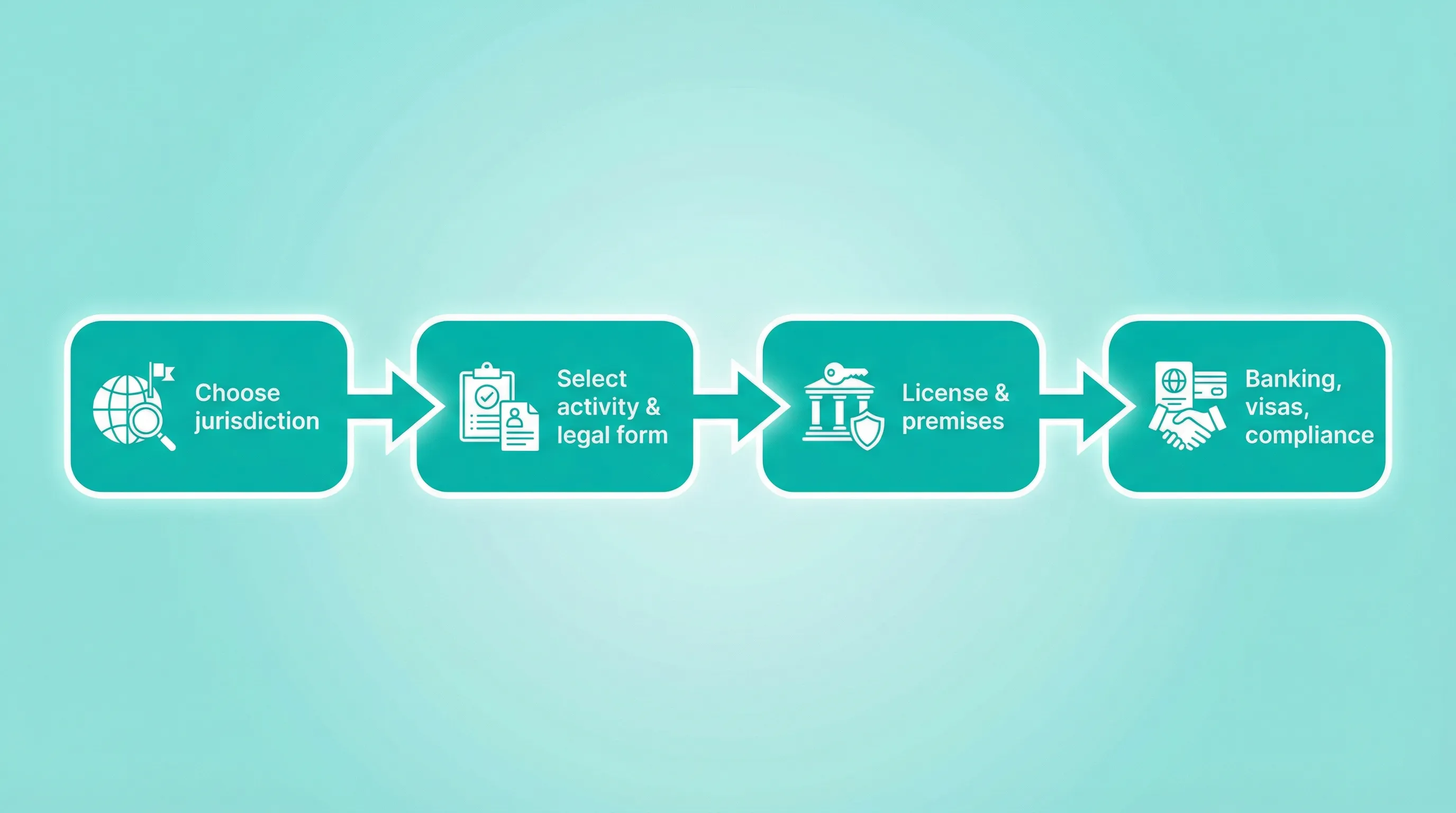
Step-by-step: how company formation in Ras Al Khaimah typically works
While details vary by jurisdiction and activity, most RAK formations follow a similar sequence.
1) Define your operating model
Before forms, decide:
- Where customers are (UAE mainland, free zone, international)
- Whether you need visas and how many
- Whether you need warehousing, industrial space, or only an office
- Who will be the manager and authorized signatories
This is also where you plan for bankability. Banks will typically want a coherent story: revenue flows, counterparties, source of funds, and a structure that matches the business.
2) Choose jurisdiction and reserve a trade name
You will propose a company name and check availability. Some words are restricted, and some activities require naming conventions.
3) Prepare incorporation documents
Depending on the setup, you may need:
- Passport copies and entry status documents
- Proof of address and basic KYC information
- Corporate documents if a shareholder is a company (for example, certificate of incorporation, register extracts, board resolutions)
If you have multiple shareholders or a group structure, document preparation can be the longest part, especially when attestations or legalized documents are required.
4) Secure premises (if applicable)
For free zone, this may be part of the package. For mainland, you may need a lease that meets the activity requirements.
5) License issuance and entity establishment
Once approved and paid, your license and incorporation documents are issued.
6) Immigration file and visas (if needed)
If you want UAE residence visas via the company, you typically open an immigration file and proceed through entry permit, medical, Emirates ID, and visa stamping processes (process details and requirements can change, so confirm at the time of application).
7) Corporate bank account opening
Banking is not automatic in the UAE. Expect due diligence on:
- Business model and expected transaction volumes
- Customer and supplier geographies
- Source of funds and source of wealth (for certain profiles)
- Contracts or invoices (sometimes requested)
Starting with clean documentation and a realistic activity scope helps.
Tax and compliance: what to plan for in 2026
RAK is part of the UAE federal tax framework. That means your RAK entity’s tax and compliance obligations depend on what you do, how you are licensed, and whether you qualify for specific regimes.
UAE Corporate Tax (CT)
The UAE introduced federal Corporate Tax effective for financial years starting on or after 1 June 2023. The headline rate is 9% on taxable income above AED 375,000, with 0% up to that threshold (subject to the law and guidance). Free zone entities may benefit from a 0% rate on “qualifying income” if they meet conditions for being a Qualifying Free Zone Person.
Because eligibility and definitions can be technical, it is important to evaluate corporate tax at the structuring stage, not after you have signed contracts.
Reference: UAE Ministry of Finance, Corporate Tax
VAT (Value Added Tax)
VAT registration is based on thresholds and business activity. Not every new company must register immediately, but you should assess early if your pricing, invoicing, and contracts will be VAT relevant.
Reference: UAE Federal Tax Authority
Economic Substance and reporting expectations
The UAE has a broader compliance environment that may include economic substance expectations, financial statement preparation, and other reporting depending on your activity, licensing jurisdiction, and whether you are part of an international group.
If you plan to rely on free zone benefits, substance and governance alignment is especially important, meaning real decision-making, adequate resources, and compliant operations.
A practical compliance snapshot
| Area | What it typically includes | Why it matters |
|---|---|---|
| Accounting and bookkeeping | Maintaining accurate books, documenting revenue and costs | Required for tax and for credible banking |
| Corporate Tax | Registration, return filing, and documentation | Penalties can apply for non-compliance |
| VAT (if applicable) | VAT registration, invoicing rules, VAT returns | Impacts pricing, cash flow, and contracts |
| Corporate governance | Manager resolutions, signatory control, UBO records | Often requested by banks and counterparties |
Bankability in RAK: what founders often underestimate
For many entrepreneurs, the real bottleneck is not license issuance, it is banking. You can materially improve your odds by designing the setup around clarity.
Key bankability factors include:
- Activity and license scope that matches reality: Avoid overly broad or mismatched activities that raise questions.
- Clean ownership trail: Transparent shareholding and clear ultimate beneficial owner (UBO) details.
- Document readiness: Basic agreements, invoices, website, and proof of operations.
- Substance alignment: If the company claims UAE operations, ensure you have the ability to demonstrate them.
If you are forming a company primarily to invoice international clients, document your service delivery model. If you are trading physical goods, be ready to explain logistics, shipping routes, and counterparties.
How long does company formation in Ras Al Khaimah take?
Timelines depend on:
- Jurisdiction (free zone, mainland, offshore)
- Whether shareholders are individuals or corporate entities
- Whether documents need legalization or attestations
- How quickly you finalize the activity, name, and facility
In many straightforward cases, licensing can be completed relatively quickly once documents are in order. However, bank account opening often takes longer than incorporation because banks control the pace of due diligence.
Common mistakes to avoid when setting up in RAK
Even experienced founders can lose time and money on avoidable issues.
- Choosing a jurisdiction based only on initial cost: A cheaper setup that blocks onshore sales, visas, or banking can become expensive later.
- Overcomplicating the structure on day one: Complex holdings or multi-entity setups can slow onboarding and raise banking questions.
- Under-planning for compliance: Bookkeeping and tax readiness are not “later” items anymore.
- Picking an activity that does not match contracts: This can trigger bank friction and compliance risk.
When it helps to use an expert-led formation partner
RAK formation is not just paperwork. The best results come from aligning:
- Your commercial reality (customers, revenue flows, hiring)
- Your regulatory pathway (license, premises, visas)
- Your compliance posture (tax, bookkeeping, governance)
- Your bankability narrative (KYC, contracts, substance)
If you want a setup that is built to last, not just to incorporate, it can be worth working with a partner who focuses on structuring and long-term compliance, not only license issuance.
At Alldren, the focus is on expert-led, transparent company structuring and ongoing support in the UAE, with direct access to senior experts and upfront pricing. If you are planning company formation in Ras Al Khaimah and want help choosing the right jurisdiction, aligning licensing with your real business, and preparing for banking and compliance, you can explore Alldren’s approach here: Alldren corporate services.


