
A RAK ICC company can be an elegant vehicle for holding shares, isolating assets, structuring international deals, or building a founder-friendly SPV. It can also become an expensive distraction when it is incorporated before the commercial, banking, tax, and governance questions are answered.
The problem is not that RAK ICC is unusually risky. The problem is that it is often marketed as simple: fast incorporation, no local office, flexible ownership, and international credibility. Those advantages are real in the right context, but they can lead founders to treat structure as a formality rather than a design decision.
In practice, the most costly RAK ICC company setup mistakes usually fall into one of four categories: choosing the wrong vehicle, underestimating bank and tax scrutiny, using weak governance documents, or failing to maintain the company after incorporation.
Below are the mistakes that most often cost founders time, money, control, or credibility, plus how to avoid them before the company exists on paper.
Why RAK ICC setup mistakes become expensive
A RAK ICC offshore company is not just a registration certificate. It is a legal person that may sign contracts, hold shares, own assets, open bank accounts, receive income, appoint directors, and make tax filings depending on its circumstances.
That means a setup mistake can affect more than incorporation. It can create downstream issues with:
- Bank account opening and ongoing KYC reviews
- Investor due diligence
- IP ownership and transfer documentation
- Tax registration, accounting, and filings
- Board control and signing authority
- Exit readiness and share transfers
- Annual renewal and registered agent requirements
Many founders only discover the issue later, when a bank rejects the structure, a buyer asks for clean corporate records, or an operating company needs to prove who owns the intellectual property.
If you need a broader foundation before getting into the mistakes, Alldren's guide to RAK ICC offshore setup, costs, and compliance basics explains the core mechanics in more detail.
Mistake 1: Choosing RAK ICC when the business needs an operating license
The most fundamental mistake is using RAK ICC for a business that actually needs to operate from the UAE.
RAK ICC is commonly used for holding, SPV, asset planning, international ownership, and similar offshore structuring purposes. It is not the same as a UAE mainland company or a RAKEZ free zone operating company. If your immediate plan is to hire UAE-based staff, sponsor residency visas through the company, lease an office, invoice UAE customers locally, or conduct licensed activity inside the UAE, RAK ICC may not be the correct primary vehicle.
This mistake often happens when founders focus on incorporation cost rather than operational reality. A cheaper structure becomes expensive if it cannot do the job the business needs it to do.
A better approach is to decide first whether the company must be an operating entity, holding entity, or special purpose vehicle. If you are still comparing RAK ICC, RAKEZ, and mainland options, this overview of Ras Al Khaimah company registration can help clarify the practical differences.
Mistake 2: Incorporating before defining the purpose of the company
Founders often ask, can I set up the company quickly? The better question is, what exactly must this company be able to do in 12, 24, and 36 months?
A RAK ICC company used to hold shares in a foreign operating company may need different documents from one used to hold intellectual property, act as a transaction SPV, own financial assets, or sit above multiple subsidiaries. The basic registration process may look similar, but the right governance, resolutions, ownership records, and contractual support can be very different.
Before incorporation, founders should be able to explain:
- What assets or contracts the RAK ICC company will hold
- Who the ultimate beneficial owners are
- Who will control the board and sign documents
- Whether investors, lenders, or buyers will review the structure
- Whether income will be received by the company
- Whether the company will need a bank account
- How the structure may change if the business raises capital or exits
When those answers are vague, incorporators may default to standard documents. Standard documents can be enough for a simple entity, but they are often inadequate for founder equity, family asset planning, investor-backed groups, or IP holding structures.
Mistake 3: Assuming the cheapest setup is the lowest-cost setup
The cheapest formation package can become the most expensive option if it produces a company that is not bankable, not tax-ready, or not fit for due diligence.
Founders sometimes compare only the visible setup fee. They miss the cost of correcting the structure later: amended documents, new resolutions, banking delays, tax cleanup, replacement registered agent work, legal reviews, and lost commercial opportunities.
A low upfront price can also hide limited advisory input. If no one asks why the company is being formed, who will use it, what income it will receive, or which bank it will approach, the founder is not getting structuring advice. They are buying registration administration.
That difference matters. A well-formed RAK ICC company should match the founder's commercial plan, not just the registry's minimum filing requirements.
| Setup shortcut | What looks attractive | What can go wrong later | Better decision |
|---|---|---|---|
| Cheapest incorporation package | Low initial fee | Weak documents, poor banking preparation, costly amendments | Compare total setup and maintenance quality |
| Generic activity description | Faster forms | Bank or counterparty confusion about purpose | Use clear, defensible commercial rationale |
| No tax discussion | Feels simple | Missed registration, accounting, or filing obligations | Confirm UAE tax position before incorporation |
| Minimal governance | Fewer documents | Disputes over authority, control, or exits | Prepare board and shareholder records properly |
Mistake 4: Treating bank account opening as automatic
Banking is where many offshore structures meet reality.
A RAK ICC incorporation certificate does not guarantee a bank account. UAE and international banks conduct KYC, source-of-funds checks, sanctions screening, transaction rationale reviews, and beneficial ownership analysis. A company that is legally formed can still be commercially unbankable if its purpose is unclear or its documents do not support the banking story.
Common banking red flags include vague activities, no website or business profile where one would be expected, unclear revenue sources, high-risk jurisdictions with no explanation, nominee arrangements that are poorly documented, and a mismatch between declared activity and expected transactions.
Founders should prepare for banking before incorporation, not after. The company name, ownership, board composition, activity description, expected counterparties, and supporting contracts should all tell a consistent story.
This does not mean every RAK ICC company needs a bank account. Some holding or SPV structures may not need immediate banking. But if banking is central to the plan, design for bankability from day one.
Mistake 5: Ignoring UAE corporate tax and accounting obligations
The phrase offshore company can create a dangerous assumption: no UAE office means no UAE tax administration. That assumption is too simplistic.
Under the UAE Corporate Tax regime, a juridical person incorporated in the UAE is generally treated as a resident person for corporate tax purposes. The exact registration, filing, exemption, and tax treatment depends on the facts, the income profile, the applicable rules, and any available reliefs. The UAE Federal Tax Authority corporate tax guidance should be reviewed with qualified advice before relying on any assumption.
For founders, the practical takeaway is straightforward: do not set up a RAK ICC company and leave tax analysis for later. If the company will hold shares, receive dividends, license IP, earn interest, enter service contracts, or sit in a wider group, tax treatment should be reviewed before documents are signed.
Accounting matters too. Even a simple holding company should maintain clear records of ownership, resolutions, agreements, invoices, asset transfers, and financial transactions. Poor records may not hurt immediately, but they can become a problem during bank reviews, tax filings, investor diligence, or a sale process.
Mistake 6: Using nominees without understanding disclosure and control
Nominee director or shareholder arrangements can have legitimate uses, including privacy, governance continuity, or corporate administration. But they are not a way to hide beneficial ownership from banks, authorities, registered agents, or regulated counterparties.
Founders get into trouble when they misunderstand the difference between legal control, beneficial ownership, and practical signing authority. If a nominee arrangement is poorly documented, the founder may create uncertainty over who can act, who must approve transactions, and what happens if there is a dispute.
Any nominee arrangement should be supported by appropriate agreements, board procedures, and beneficial ownership disclosures where required. It should also be consistent with the banking and tax position of the company. A structure designed for privacy should never depend on misleading a bank or authority.
Mistake 7: Forgetting that governance is not just for large companies
Governance problems do not only affect big groups. They often hurt early-stage founders because decisions are informal, documentation is thin, and roles change quickly.
A RAK ICC company may need clear rules for director appointments, share transfers, voting, reserved matters, signing authority, dividend decisions, asset transfers, conflicts of interest, and company recordkeeping. If there are multiple founders, family members, investors, or asset contributors, these rules become even more important.
Weak governance can create expensive ambiguity. Who can sell the asset? Who can sign a loan document? Who approves licensing IP to the operating company? What happens if a founder leaves? If the documents do not answer these questions, a future buyer, bank, or investor may require cleanup before moving forward.
For structures involving holding, SPV, or asset ownership plans, Alldren's guide to RAK ICC companies for holding, SPV, and asset plans is a useful next step.
Mistake 8: Moving assets into the structure without proper transfer documents
A company does not own an asset just because everyone intends it to.
If a founder wants a RAK ICC company to hold shares, intellectual property, a receivable, a loan, or another valuable right, the ownership transfer must be documented correctly. That may require share transfer instruments, IP assignments, board approvals, registers, contract novations, license agreements, or supporting valuation records.
This is especially important for SaaS founders and digital businesses. If the operating company uses software, trademarks, domain names, source code, or customer contracts, the legal ownership and licensing chain must be clean. Otherwise, the structure may fail exactly when it matters most, such as during fundraising, litigation, tax review, or acquisition due diligence.
Founders should avoid retrofitting ownership after the fact. It is usually easier, cleaner, and cheaper to document asset transfers properly at the start.
Mistake 9: Assuming property, investment, or crypto use cases are all treated the same
Some founders set up a RAK ICC company with a broad plan to hold assets, then later discover that each asset class has its own rules, counterparties, and risk profile.
Real estate ownership may depend on the emirate, developer, land department rules, and whether that specific type of company is accepted. Investment activity may raise licensing, banking, reporting, or regulatory questions. Digital asset and crypto-related structures can face enhanced bank scrutiny and may require separate regulatory analysis.
The company may be technically capable of holding assets, but that does not mean every asset can be acquired smoothly or banked easily. Before setup, founders should test the intended use case with the relevant counterparties, not only with the corporate registry.
A practical pre-check should cover the asset, jurisdiction, counterparty acceptance, banking route, tax implications, and required documentation.
Mistake 10: Letting the company lapse after incorporation
RAK ICC companies need ongoing administration. Annual renewal, registered agent coordination, statutory records, board decisions, accounting records, and tax-related compliance cannot be ignored simply because the company has no physical office.
A lapsed or poorly maintained company can create several problems. Banks may freeze or close accounts. Counterparties may refuse to sign. Investors may require reinstatement or cleanup. Asset transfers may be delayed. In some cases, the founder may lose time-sensitive commercial opportunities because the company is not in good standing.
The fix is simple but often neglected: create a compliance calendar immediately after incorporation. Assign responsibility for renewals, accounting, tax filings, corporate approvals, and document storage. If the company is part of a wider group, align its reporting calendar with the operating companies.
A founder's pre-setup decision framework
Before forming a RAK ICC company, founders should pressure-test the structure. The goal is not to make incorporation more complicated. The goal is to avoid building the wrong thing quickly.
| Question | Why it matters |
|---|---|
| What is the company's exact purpose? | Determines whether RAK ICC is the right vehicle |
| Will the company operate in the UAE? | May require RAKEZ, mainland, or another licensed structure |
| Does it need a bank account? | Banking should influence documents and ownership design |
| What income will it receive? | Drives tax, accounting, and filing analysis |
| What assets will it hold? | Requires transfer documents and counterparty acceptance |
| Who controls decisions? | Needs governance, signing authority, and board clarity |
| Will investors or buyers review it? | Demands clean records from the beginning |
| Who maintains compliance annually? | Prevents lapses, delays, and registry problems |
If the answers are unclear, pause before filing. A few days of structuring work can prevent months of banking delays or years of governance ambiguity.
When RAK ICC is usually a good fit
RAK ICC can be a strong option when the company is designed for a defined offshore or holding purpose. Common examples include a holding company for foreign subsidiaries, a special purpose vehicle for a transaction, a founder asset protection layer, a structure for IP ownership, or a vehicle in a broader family or private wealth plan.
It is usually less suitable as a standalone operating company for UAE-based activity, a quick visa route, or a substitute for regulated financial, investment, or crypto licensing. It may still be part of a larger UAE structure, but it should not be forced into a role it was not designed to perform.
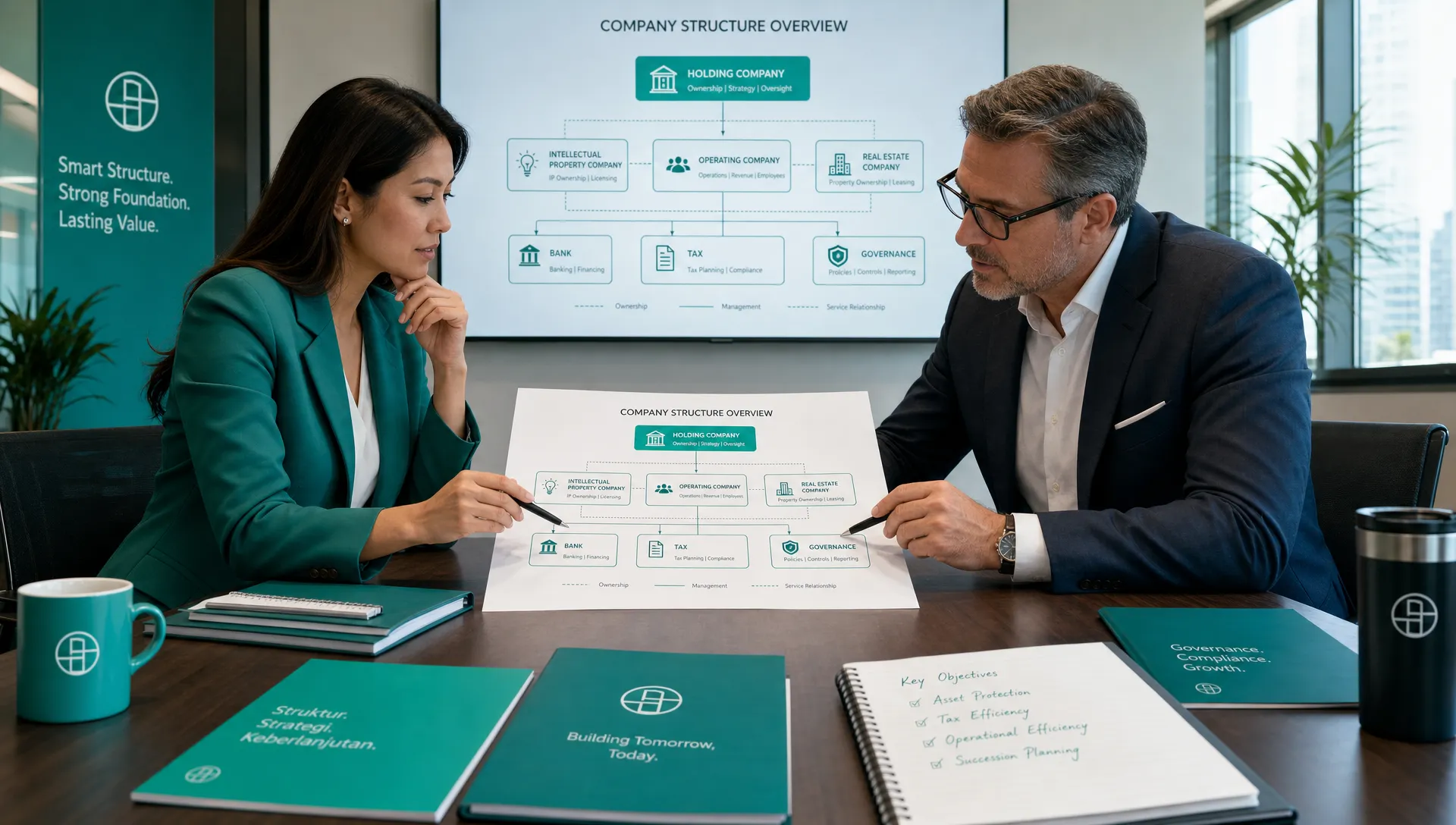
The best setups start with a structure map, not an application form. Once the role of the RAK ICC company is clear, incorporation becomes an implementation step rather than a gamble.
Frequently Asked Questions
Is a RAK ICC company the same as a RAKEZ free zone company? No. RAK ICC is generally used for offshore holding, SPV, and asset structuring purposes, while RAKEZ free zone companies are typically used for licensed business activities in or from a UAE free zone. The right choice depends on what the company must actually do.
Can a RAK ICC company open a UAE bank account? It may be possible, but it is not automatic. Banks will review the company's purpose, beneficial owners, expected transactions, source of funds, jurisdictions involved, and supporting documents. Bankability should be considered before incorporation.
Does a RAK ICC company need to think about UAE corporate tax? Yes. Founders should not assume that offshore means no tax administration. UAE-incorporated juridical persons can fall within the UAE Corporate Tax framework, and the exact obligations depend on the company's facts and income profile.
Can a RAK ICC company sponsor UAE residency visas? A RAK ICC company is not normally used as a visa-sponsoring operating vehicle. If residency visas, employees, office space, or UAE operating activity are required, a free zone or mainland structure may be more appropriate.
What is the biggest RAK ICC setup mistake founders make? The biggest mistake is forming the company before defining its purpose. Once the intended use, banking needs, ownership, tax position, and governance requirements are clear, most other setup decisions become much easier.
Build the structure before you incorporate
RAK ICC can be a highly useful tool, but only when it is engineered around the founder's real commercial objective. The costliest mistakes usually come from treating incorporation as the goal, when the real goal is a structure that can be banked, maintained, defended, and used.
Alldren helps founders and private clients establish and manage UAE companies with tailored structuring, compliance support, corporate governance, banking support, residency visa processing where appropriate, bookkeeping, tax registration, nominee director services, transparent upfront pricing, and direct access to senior experts.
If you are considering a RAK ICC company setup, start with the structure, not the form. Speak with Alldren before you incorporate so the company you register is the company your business actually needs.