

RAKEZ Free Zone Ras Al Khaimah can be an efficient UAE base for founders who want a licensed operating company, access to UAE residency pathways, and a practical platform for banking, invoicing, and compliance. But it is not simply a low-cost license purchase. The right outcome depends on whether your activity, facility, visa plan, tax position, and bank narrative all fit together.
For founders, the real question is not whether RAKEZ is good. It is whether RAKEZ is the right operating jurisdiction for your business model, and whether the company will be bankable and compliant after the license is issued.
This guide explains how to assess RAKEZ from a founder’s perspective in 2026, what to decide before setup, and where mistakes usually happen.
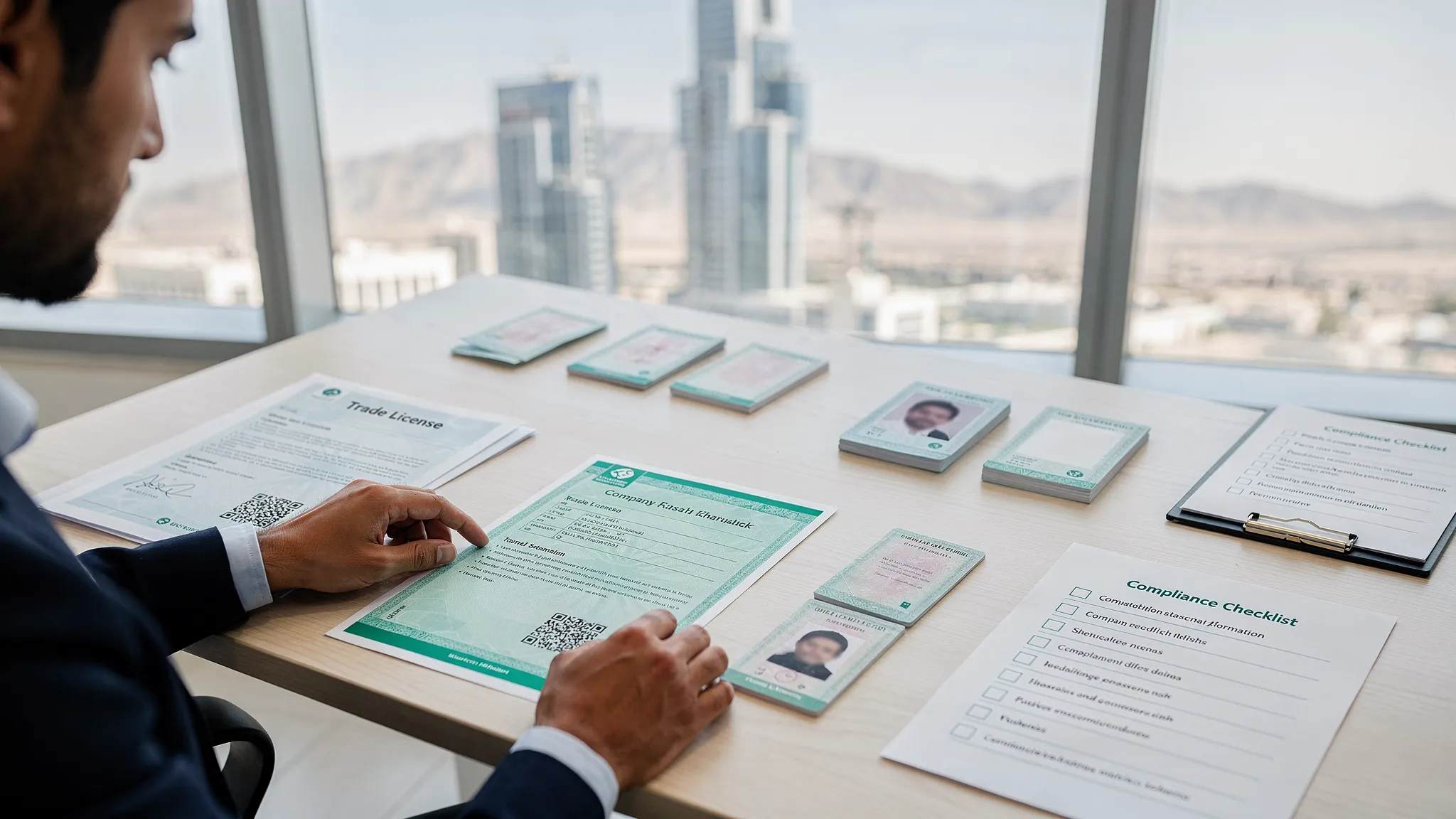
What RAKEZ Is, and What It Is Not
RAKEZ, the Ras Al Khaimah Economic Zone, is a UAE free zone authority in the Emirate of Ras Al Khaimah. It supports company formation, business licensing, facilities, and related operational requirements for a wide range of commercial, service, industrial, and trading activities. You can learn more about the authority directly through the official RAKEZ website.
A RAKEZ company is typically used as an operating entity. That means it can issue invoices under its approved licensed activities, lease workspace or facilities, apply for eligible visas, and maintain business records. For many founders, it offers a balance between UAE presence, cost control, and operational flexibility.
It is important to distinguish RAKEZ from RAK ICC. RAKEZ is a free zone for operating companies. RAK ICC is an offshore corporate registry commonly used for holding companies, SPVs, and asset ownership structures. If your goal is to run a business, hire, obtain visas, and open a UAE operating bank account, RAKEZ is usually more relevant than a pure offshore entity. If your goal is holding assets or structuring ownership, a RAK ICC entity may be considered separately. For that comparison, see Alldren’s guide to RAK ICC offshore setup and compliance.
RAKEZ is also not a shortcut around banking, tax, or compliance. A license helps establish a legal business presence, but banks and authorities still expect clear ownership, source-of-funds evidence, accurate activity selection, proper accounting, and ongoing compliance.
Who RAKEZ Usually Works For
RAKEZ can be a strong fit for founders who want a practical UAE company without necessarily needing a Dubai mainland license or a financial free zone structure. It is often considered by solo founders, small teams, international consultants, trading businesses, e-commerce operators, light industrial businesses, and companies that need UAE residency linked to a legitimate operating company.
The founder profile matters because RAKEZ is most effective when it supports the real commercial flow of the business. A consultant billing overseas clients has a different setup requirement from an importer storing goods, and both differ from a founder seeking UAE residency first and commercial operations later.
| Founder scenario | Why RAKEZ may fit | Key point to verify |
|---|---|---|
| B2B consultant or agency | Service license, UAE company profile, potential visa pathway | Activity wording must match contracts and invoices |
| E-commerce or trading founder | Commercial license options and scalable operations | Mainland sales, logistics, customs, and marketplace requirements |
| Light manufacturing or industrial business | RAK has practical industrial infrastructure | Facility, permits, and operational approvals |
| International founder seeking UAE residency | Company formation can support visa processing where eligible | Visa quota depends on facility and package |
| Holding or passive asset structure | RAKEZ may be useful as an operating or substance layer | RAK ICC may be better for pure holding purposes |
RAKEZ may be less suitable if your activity is heavily regulated, if your clients require a Dubai mainland license, if you need a prestige financial center presence, or if your business involves activities that require specialist approvals. Financial services, payment services, virtual asset services, healthcare, education, and similar sectors should be reviewed carefully before any application is filed.
The Five Decisions Founders Should Make Before Applying
A smooth RAKEZ setup starts before incorporation. The founders who experience the fewest delays usually make the following decisions in advance.
1. Define the activity around revenue, not labels
Your licensed activity should match how the business will actually earn money. Banks, tax advisors, counterparties, and free zone authorities all look for consistency between your license, contracts, invoices, website, and transaction flows.
For example, a founder may describe the business as technology, but the revenue could come from software development, SaaS subscriptions, IT consulting, digital marketing, marketplace commissions, or resale of hardware. Each has different licensing and banking implications.
A vague or mismatched activity can create problems later. Banks may question why incoming payments do not match the license. Clients may reject invoices if the activity appears unrelated. Tax and VAT treatment may also become harder to defend.
2. Choose a legal form that matches ownership and control
RAKEZ structures commonly accommodate single-shareholder companies, multi-shareholder companies, and branches, depending on the current rules and the applicant profile. The best choice depends on ownership, governance, future investment, and whether the shareholder is an individual or another company.
A solo founder may prioritize simplicity. Co-founders need clear authority, profit rights, and exit rules. A foreign corporate shareholder may require additional notarized or attested documents, plus more detailed bank KYC.
If there are multiple founders, do not treat incorporation documents as a substitute for governance. A shareholders’ agreement, signing authority matrix, reserved matters list, and documented IP ownership can prevent disputes later.
3. Select facilities based on visas, banking, and substance
Many founders focus on the license cost, then choose the lightest facility option available. That may work for some low-risk service businesses, but it can also create banking or substance problems if the company’s activity suggests a need for real premises.
A trading company, team-based business, industrial operation, or company expecting material transaction volumes may need a stronger premises profile. Banks increasingly assess whether the stated business model makes sense in light of the company’s address, lease, staff, website, contracts, and local management.
If the founder needs UAE residency, facility selection also affects visa eligibility. Visa processing typically requires a valid license, immigration file, entry permit or status change where applicable, medical fitness testing, biometrics, and Emirates ID steps.
4. Build the bank account story before incorporation
A RAKEZ license does not guarantee bank account approval. UAE banks apply AML and KYC checks, and they assess the whole profile, not just the license.
Founders should prepare a bank-ready narrative before setup. This includes who owns the company, where funds came from, who customers are, what services or goods will be provided, expected monthly activity, countries involved, and why the UAE company is commercially necessary.
Alldren’s guide on what improves UAE company bank account approval explains this in more detail, but the principle is simple: the bank file should answer obvious risk questions before the bank asks them.
5. Plan tax and accounting from day one
Free zone status does not mean no tax obligations. UAE Corporate Tax applies across the UAE, and free zone companies must understand whether they qualify for preferential treatment, what income is qualifying or non-qualifying, whether audited financial statements are needed, and what filings apply.
Under the UAE Corporate Tax regime, a standard taxable person is generally subject to 0% on taxable income up to AED 375,000 and 9% above that threshold. Free zone persons may benefit from 0% on qualifying income if they meet the relevant conditions, but non-qualifying income can be taxed differently. The rules are technical, so founders should refer to official guidance from the UAE Ministry of Finance on Corporate Tax and seek tailored advice.
VAT is separate. UAE VAT registration is generally mandatory when taxable supplies exceed AED 375,000, and voluntary registration may be available at a lower threshold. Exported services can still count toward registration thresholds in many cases. The Federal Tax Authority is the official source for registration and filing requirements.
A Founder-Friendly RAKEZ Setup Workflow
RAKEZ incorporation is easier when founders treat licensing, banking, immigration, and tax as parallel workstreams rather than sequential tasks. The license is only one milestone.
| Stage | Founder outcome | What to get right |
|---|---|---|
| Structuring review | Confirm RAKEZ is the right jurisdiction | Activity, client locations, visa needs, banking profile |
| KYC and UBO preparation | Establish transparent ownership | Passports, addresses, ownership chart, source-of-funds evidence |
| Activity and name approval | Align license with operations | Avoid vague or misleading activity descriptions |
| Facility selection | Match premises to business and visas | Workspace, lease, operational substance, visa quota |
| License issuance | Obtain legal operating basis | Check names, activities, shareholders, and manager details |
| Immigration and visas | Enable eligible residency steps | Establishment card, medical, biometrics, Emirates ID |
| Bank onboarding | Activate commercial operations | Business plan, contracts, invoices, website, expected transactions |
| Tax and bookkeeping | Make the company compliant | Corporate tax, VAT assessment, accounting records, renewals |
Straightforward applications can often move quickly once documents are complete, but delays usually arise from KYC gaps, corporate shareholder documentation, activity ambiguity, external approvals, visa coordination, or bank due diligence.
What Banks Look For in a RAKEZ Company
Banks are not only checking whether your company exists. They are checking whether the company makes commercial sense and whether the risk can be managed.
A strong RAKEZ bank file usually includes the trade license, incorporation documents, facility evidence, shareholder and manager KYC, ownership chart, source-of-funds and source-of-wealth evidence, business description, website or pitch deck, customer and supplier information, contracts or draft agreements, and expected account activity.
The most credible applications are consistent. The licensed activity matches the website. The expected payments match the contracts. The countries involved match the founder’s background and customer base. The source of funds can be evidenced through salary records, business sale documents, savings history, investment statements, or audited company accounts where relevant.
Founders often underestimate how much banks dislike uncertainty. A one-page business profile that explains the model in plain English can materially improve the quality of the application, even though approval remains at the bank’s discretion.
Mainland Trading, Free Zone Limits, and Commercial Reality
A RAKEZ free zone company is not automatically the same as a UAE mainland company. Free zone companies are generally designed to operate within the free zone framework and internationally, subject to their license and applicable rules. If you plan to sell directly into the UAE mainland, maintain local stock, distribute physical goods, hire onshore, or serve government clients, you must review whether additional arrangements are required.
Those arrangements may include a mainland distributor, a local commercial arrangement, an additional mainland license, customs registration, or other approvals depending on the business model. This is especially important for trading and e-commerce founders who assume that a free zone license is enough for every UAE sales channel.
If the main revenue will come from UAE mainland customers, compare RAKEZ with mainland options before committing. Alldren’s broader overview of company formation in Ras Al Khaimah can help you compare RAKEZ, RAK mainland, and RAK ICC routes.
Cost Planning: Look Beyond the License Fee
Founders often compare RAKEZ based on advertised license prices. That is understandable, but it can be misleading. The first-year budget should include the setup and the operating readiness of the company.
Typical cost drivers include license category, number of activities, facility type, number of shareholders, visa requirements, immigration file, document attestation, corporate shareholder documentation, banking preparation, bookkeeping, tax registration, and annual renewal. A more complex ownership structure, regulated activity, or higher-risk banking profile can increase both time and professional support requirements.
The cheapest package is not always the cheapest outcome. If the license activity is wrong, the facility is too weak for banking, or the company is not tax-ready, the founder may pay later through rework, delayed bank approval, rejected invoices, or compliance penalties.
First 90 Days After RAKEZ Setup
The first 90 days determine whether the company becomes operational or remains a license in a folder. Founders should use this period to create a compliance rhythm.
In the first 30 days, review all issued documents, confirm shareholder and manager details, create a secure corporate records folder, prepare the bank pack, and assign responsibility for renewals, accounting, and tax filings.
By day 60, the company should have banking applications underway, a bookkeeping process, draft invoice templates, contract templates, and a clear VAT and corporate tax registration plan. If visas are needed, immigration steps should be coordinated with bank onboarding and operational timelines.
By day 90, founders should have a working compliance calendar, accounting records, evidence of business activity, updated UBO and KYC records, and a documented process for approvals, signatures, and document retention.
For a broader post-setup framework, see Alldren’s UAE compliance checklist for new companies.
Common RAKEZ Mistakes Founders Should Avoid
Most RAKEZ problems are preventable. They usually come from treating setup as a transaction rather than a structure.
- Choosing the cheapest license without checking banking, visas, and activity fit.
- Using a broad activity description that does not match invoices or contracts.
- Assuming a RAKEZ company can trade freely on the mainland without additional review.
- Leaving bank account preparation until after incorporation.
- Mixing personal and business funds while waiting for a corporate account.
- Ignoring VAT and Corporate Tax registration until revenue arrives.
- Using a complex shareholder structure without preparing KYC and source-of-funds evidence.
- Forgetting annual renewals, UBO updates, visa expiries, and accounting records.
The better approach is to design the company around the full operating lifecycle: license, facility, banking, visas, tax, governance, and compliance.
When to Use Expert Support
A simple founder-owned service company may be manageable with basic guidance, provided the activity is clear and banking risk is low. Expert support becomes more important when there are multiple shareholders, corporate shareholders, cross-border tax considerations, regulated activities, higher transaction volumes, crypto or digital asset exposure, trading operations, or a need for investor-ready governance.
Professional support is also useful when founders want the setup to be bank-ready from the beginning. This includes aligning the license with the business model, preparing KYC and UBO files, selecting the right facility, coordinating visas, preparing bank documentation, and setting up bookkeeping and tax registration processes.
Alldren provides expert-led UAE corporate services for company setup, structuring, ongoing compliance, governance, bank account opening support, residency visa processing, bookkeeping, and tax registration. The objective is not merely to incorporate a company, but to build a structure that can operate, evidence its purpose, and withstand bank and authority review.
Frequently Asked Questions
Is RAKEZ the same as RAK ICC? No. RAKEZ is a Ras Al Khaimah free zone used for operating companies, licensing, facilities, visas, and business activity. RAK ICC is an offshore registry often used for holding companies, SPVs, and asset ownership structures.
Can a RAKEZ company open a UAE bank account? Yes, a RAKEZ company can apply for a UAE corporate bank account, but approval is not automatic. Banks assess ownership, activity, source of funds, business evidence, expected transactions, and overall risk profile.
Does a RAKEZ company provide UAE residency? A RAKEZ company may support UAE residency visa applications where the chosen package and facility provide visa eligibility. The process usually involves immigration file setup, entry permit or status change, medical testing, biometrics, and Emirates ID issuance.
Is RAKEZ tax-free? Not automatically. UAE Corporate Tax and VAT rules still need to be assessed. Free zone companies may qualify for certain 0% Corporate Tax treatment on qualifying income if conditions are met, but the rules are technical and should be reviewed carefully.
Can a RAKEZ company sell to Dubai or other UAE mainland customers? It depends on the activity and sales model. Some mainland trading may require a distributor, customs arrangements, a mainland license, or other approvals. Founders should confirm the route before relying on mainland revenue.
How long does RAKEZ setup take? Licensing can be relatively efficient when documents are complete, but total operational readiness depends on KYC, facility selection, visas, bank onboarding, and tax registration. Banking often takes longer than incorporation.
Build a RAKEZ Structure That Works After Setup
A RAKEZ license is valuable only if the company can operate, bank, invoice, hire, renew, and comply. Before you incorporate, make sure the structure matches your real business model and your 12 to 24 month plan.
Alldren helps founders design and manage UAE companies with transparent pricing, direct senior expert access, and ongoing support across setup, compliance, banking, visas, bookkeeping, and tax registration. If you are considering RAKEZ Free Zone Ras Al Khaimah, speak with Alldren before you file so the company is structured correctly from day one.
Contact Alldren to review your RAKEZ setup, banking readiness, and compliance plan.